

Your action guide
for climate impact
The 2026 Speed & Scale Action Guide
Small actions compound.
No household cuts gigatons alone. But every choice is a signal. Lots of small choices can add up to something big – and even sway institutions.
Buy an EV and you’re telling automakers to build more of the next one. Last year that signal rang loud and clear: 20 million EVs sold, one in four new cars. Battery packs cost 93 percent less than in 2010. The next buyer gets a cheaper car because you bought yours.
Skip one burger a week for a year and it’s equivalent to skipping 300 miles of annual driving. If one in four Americans did the same, that’s 2 million cars off the road for a year.
Speed & Scale is a plan to reach net-zero emissions by 2050 and get halfway there by 2035. It’s measured in gigatons (or billions of tons of emissions), and this guide shows how a small set of important individual actions can add up to meaningful impact. Here’s the blueprint: Start with your day, make the big changes, then expand your impact.
Above all else, go for the gigatons.

Start With Your Day

Waste less food
The average household throws out over $1,800 in uneaten food a year. Food waste emits 20 percent more CO2e than all the planes in the air. How can you cut it down? Plan meals, use your freezer, and repurpose leftovers.
Helpful resources
Eat less beef
Replace one beef burger a week and it’s like skipping 300 miles of driving a year. Swap beef for chicken, fish or beans a few times a week, and you’ll both cut emissions and save on groceries.
Helpful resources
Reuse, recycle, repair
Hang on to your phone one extra year and you’ll cut as much carbon as avoiding 150 miles of driving. Repairing clothes, devices, and appliances instead of re-buying also saves hundreds of dollars a year.
Helpful resources
Green your space
Gardens and trees cool your home, reduce stress, and clean the air. A well-planned landscape can cut an unshaded home’s air conditioning costs by 15 to 50 percent. Deep-rooted native plants lock carbon in the soil and need less water and mowing.
Helpful resources
Take public transit
Take the bus or train for a 20-mile daily commute and you’ll cut the carbon from one and a half New York to L.A. round-trip flights a year. Using buses, subways, or light rail can cut your transportation footprint in half. Giving up a car also saves up to $13,000 a year.
Helpful resources
Make the Big Switches
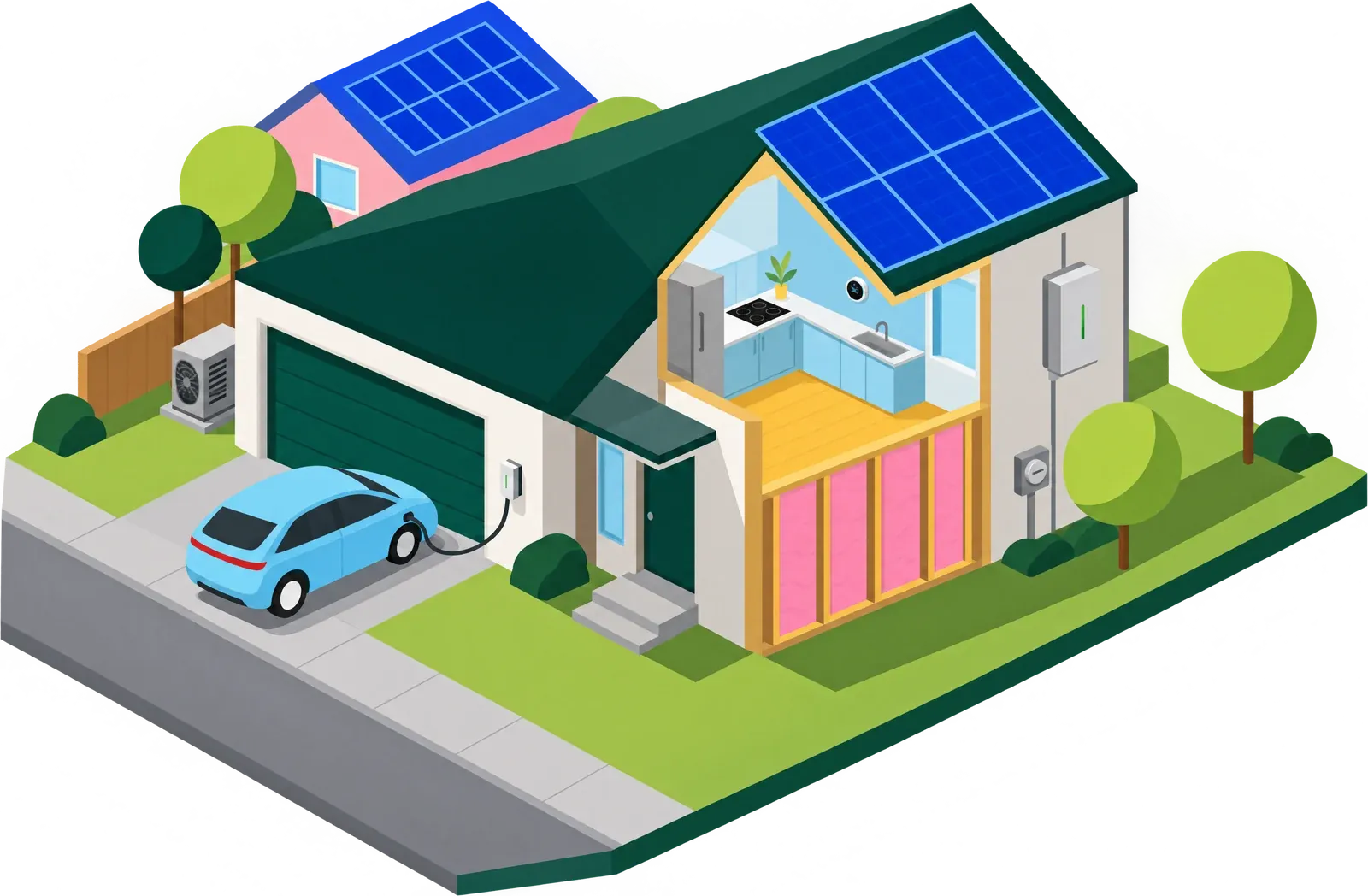
Electrify your home
The average U.S. household saves $370 a year by switching to a heat pump system from a gas heater. Heat pumps and induction stoves are safer and usually cheaper to run, and many states and utilities offer rebates.
Helpful resources
Go solar (or switch plans) with storage
A home solar system makes as much electricity each year as burning five tons of coal, and can save tens of thousands of dollars over the system’s lifetime. Renters can also often opt in to cleaner power.
Helpful resources
Make this your last gas car
Driving electric cuts your car’s climate emissions by about three quarters. With state and local rebates, less maintenance, and no gas, EVs are often cheaper to own over the car’s lifetime.
Helpful resources
Insulate and weatherproof
Sealing leaks and upgrading insulation trims on average roughly $400 a year from energy bills and keeps your home more comfortable.
Helpful resources
Expand Your Impact
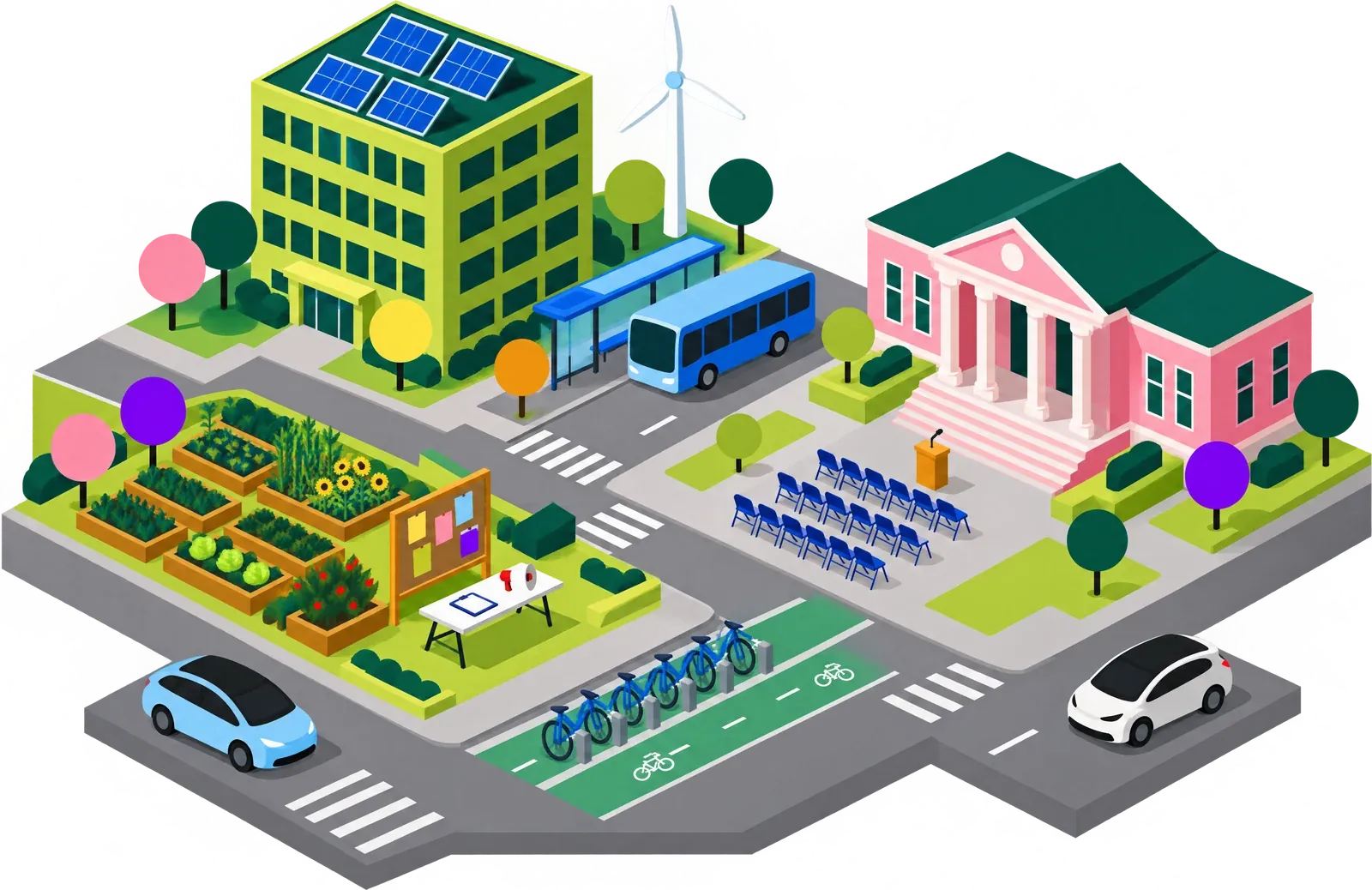
Take climate action to work
Companies are moved by their employees. Today, over 13 percent of companies in the Fortune Global 500 have a net-zero goal. The biggest difference you can make on the job is to help advocate for new clean technologies and speed up deployment of solar, wind and batteries.
Helpful resources
Participate at public meetings
Investor-owned utilities plan to pour nearly $1.4 trillion into the grid and other projects through 2030, with big implications for your electric bill. Speaking up at a single hearing can shape the decision.
Helpful resources
Join local climate efforts
Organizing in your community has near-term local impact and builds momentum for national and global change. Volunteer organizations like 350.org have mobilized millions of people in 188 countries and pushed institutions holding more than $40 trillion to commit to pulling out of dirty energy.
Helpful resources
Helpful resources
Every link in this guide, plus the full Speed & Scale plan, can be found below.
Start With Your Day
- ReFEDrefed.org
- Save the Foodsavethefood.com
- EAT-Lancet Planetary Health Dieteatforum.org
- WWF Footprint Calculatorfootprint.wwf.org.uk
- iFixitifixit.com
- Recyclepediarecyclecoach.com/recyclepedia
- Transit Apptransitapp.com
- Audubon Native Plants Databaseaudubon.org/native-plants
- Garden for Wildlifegardenforwildlife.com
Make the Big Switches